
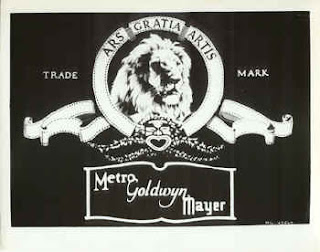
It’s been 102 years since MGM’s studio opened Apr. 26, 1924, but some of the biggest problems that confronted the new company are still plaguing Hollywood.
New York theatre magnate Marcus Loew formed Metro-Goldwyn to get the volume of quality movies he needed for his growing theatre circuit. Metro Pictures, which he had bought for $3M in 1920, couldn’t provide enough good films. Buying financially troubled Goldwyn Pictures for $4.7M (plus $600,000 more for the shares still owned by Sam Goldwyn, who’d already left GP) got him a state-of-the-art 46 acre studio in Culver City, a growling lion logo and a big roster of top acting & directing talent. In those early Hollywood days, no one cared about studios gobbling up other studios.
Loew, however, felt Goldwyn’s management wasn’t up to running his new studio, so on the advice of his attorney, J. Robert Rubin, he also hired indie producer Louis B. Mayer, creating MGM. Loew acquired Mayer, his small studio and his boy wonder production assistant, Irving Thalberg, for the bargain price of $76,500. They, in turn, made MGM a powerhouse studio.
Mayer & Thalberg soon found they’d inherited two big production problems from Goldwyn Pictures. The drama GREED was being finished by the notoriously difficult director Eric von Stroheim. His final cut ran 40 reels — or about six hours! After weeks of pressure, he trimmed it to 24 reels, a running time of nearly 3 1/2 hours. Mayer & Thalberg then put an editor to work on GREED, chopping off two more reels and informing von Stroheim this was the final version.
They faced an even worse problem with the action epic BEN-HUR, based on General Lew Wallace’s 1880 novel, which director Charles Brabin had been shooting in Italy since October 1923. Realizing it was a budgetary disaster, Loew had Mayer secretly assemble a new team to take over in Italy — director Fred Niblo, screenwriter Bess Meredyth and Ramon Navarro to replace George Walsh in the title role.
Loew sailed to Italy in July, broke the bad news and supervised the changeover before returning to NYC in August. But the new team didn’t do any better, as Mayer found out when he visited Rome a few months later. He and Thalberg agreed the only way out was to shut down in Italy, build massive new sets in Culver City and complete production there. That’s where the legendary chariot race was finally shot by second-unit director B. Reeves Eason and 62 assistant directors with 42 cameras and using 200,000 feet of film. Production finally wrapped in August 1925.
BEN-HUR wound up costing $3.95M — which would be $60M+ today — making it Hollywood’s most expensive silent movie. Its worldwide release brought MGM $9M, but thanks to the very expensive deal for the film rights that Goldwyn Pictures had made, BEN-HUR didn’t return a profit until it was re-released in 1931!


Leave a Reply