
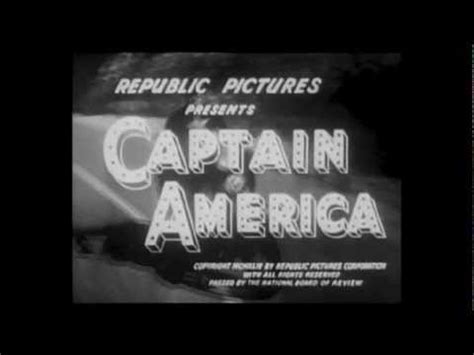
When CAPTAIN AMERICA came to life Feb. 5, 1944 as a weekly Republic Pictures movie serial, Timely Comics was unhappy that the on screen superhero was nothing like his famous comic book self.
Timely, which evolved into Marvel Comics in the 1960s, had done a deal with Republic, a leading indie distributor of low budget westerns and serials at the time, to bring CAPTAIN AMERICA to the big screen. The 15-part black & white serial was the first time a Marvel character went Hollywood. It turned out to be Republic’s final superhero serial and its most expensive at about $223,000, after having been budgeted at $182,623.
Serials were part of the overall entertainment program — also including cartoons, newsreels & travelogues — that moviegoers saw at cinemas in the 1940s. Over the years, Republic had developed a reputation for changing characters when they went into its serials, but with CA the differences with the popular comic book star were so great that Timely was furious.
To begin with, U.S. Army Private Steve Rogers wasn’t even in the serial. Instead, Captain America’s alter ego was now Grant Gardner, a crime fighting District Attorney (Dick Purcell played both roles). The comic book took place during World War II and Rogers was a weakling who turned into the ultimate fighter after a Super-Soldier Serum medical experiment. But there was nothing like that in the serial.
Captain America’s signature red, white & blue shield was replaced by a gun. The Captain was famous for fighting the Nazis, but there weren’t any in this WWII serial. The comic book Captain’s sidekick, Bucky, was also gone. In Republic serials, unmasking a villain’s identity was a key plot point reserved for the final chapter — but CA was unique because moviegoers knew all about the villain right from the start.
What may have accounted for Republic’s extensive reworking of the comic book’s storyline was that the studio already had a script written for an unproduced sequel to its 1940 serial MYSTERIOUS DOCTOR SATAN about a masked hero called The Copperhead. Republic may have hoped to recoup its costs for that screenplay by turning it into the new CA serial.
When Timely took issue with the changes, Republic replied that Timely hadn’t given it materials that explained Captain America was really Steve Rogers, a soldier carrying a shield rather than a gun. Republic also claimed Timely’s complaints were untimely because production was already well underway and making script changes was now impossible.
In the end, Republic won by pointing out, as Hollywood still does today, that it wasn’t really under any contractual obligation to do anything that Timely was upset about.

 ZAMM.COM
Leave a comment