
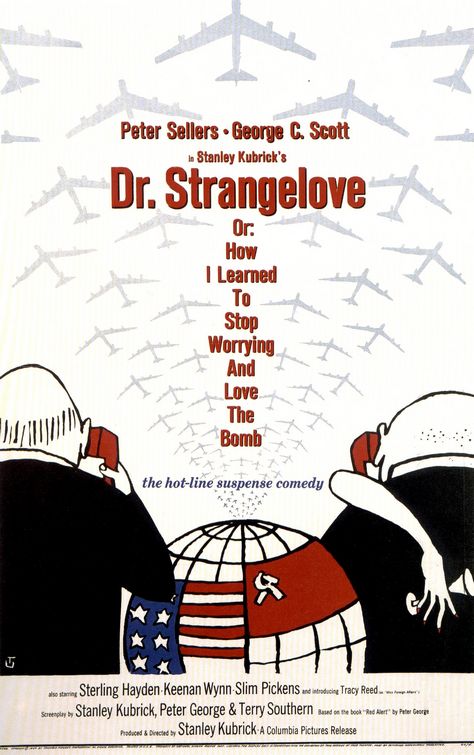
Stanley Kubrick’s Cold War satire DR. STRANGELOVE opened Jan. 29, 1964, but would have arrived months earlier if not for the assassination of President John F. Kennedy.
A test screening of DR. STRANGELOVE OR: HOW I LEARNED TO STOP WORRYING AND LOVE THE BOMB had been set for Nov. 22, 1963, the day JFK was killed in Dallas. It was to have premiered soon afterwards, but Columbia Pictures moved it to late January, hoping that by then moviegoers would be in the mood for a dark comedy.
STRANGELOVE, now a critically acclaimed classic, was a sensitive film to market because its plot is driven by a deranged U.S. Air Force general planning a nuclear sneak attack on the Soviet Union, creating a crisis destined to end in a nuclear holocaust when the Soviets respond. With little time in which to stop the General or convince the Soviets the attack wasn’t intentional, President Merkin Muffley, one of three roles played by Peter Sellers, convenes a Pentagon War Room meeting of politicians and military brass.
STRANGELOVE’s plot seemed a bit farfetched 62 years ago, but is much more believable in today’s climate of global political mistrust. Sterling Hayden, as Brigadier General Jack D. Ripper of Burpelson Air Force Base, maintains the fluoridation of our water supply is a Soviet plot to poison Americans. Ripper sets up a nuclear strike without the knowledge of the President or the Joint Chiefs of Staff Chairman General Buck Turgidson, played by George C. Scott. Only Ripper knows the code to stop his B-52s.
Sellers, as RAF Group Captain Lionel Mandrake, claims he can call off the bombers, but is being held on the base under Ripper’s orders. In the War Room, Muffley and Turgidson are asking nuclear scientist Dr. Strangelove, Sellers’ third role, how to keep this from mushrooming into a full scale nuclear war.
Filming of STRANGELOVE took place outside of London at Shepperton Studios because Sellers was going through a divorce then and couldn’t leave England.
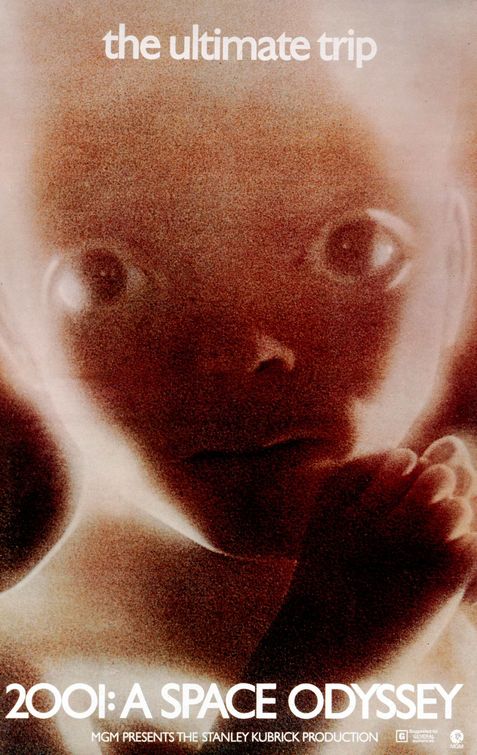
The War Room set was used for what would have been the film’s final scene — a massive pie fight, which was filmed, but ultimately scrapped. Kubrick, who next made the 1968 classic 2001: A SPACE ODYSSEY, said pie flinging wasn’t consistent with STRANGELOVE’s satiric tone.
Others countered that after Kennedy’s assassination Columbia was very nervous about the scene where Muffley’s hit in the face by a cream pie and the General declares, “Gentlemen! Our gallant young president has been struck down in his prime!” Kubrick, however, insisted that he cut the scene out, himself, while editing for the November 22 test screening.
Instead, he ended the movie with a montage of explosions as Vera Lynn sings the famous World War II English song “We’ll Meet Again,” indicating that the doomsday machine was activated.
(See more at http://www.ZAMM.com)
#movies #boxoffice #martingrove
#stanleykubrick
 ZAMM.COM
Leave a comment