
When MGM’s Louis B. Mayer announced the formation of today’s Academy of Motion Picture Arts & Sciences Jan. 11, 1927, it wasn’t meant to give awards.
What Mayer wanted was a way to mediate Hollywood labor disputes without having unions represent filmmakers and studio workers. His plan included an annual members banquet, but Oscars weren’t on the table yet.
The new International Academy of Motion Picture Arts and Sciences had members from five moviemaking branches — acting, directing, producing, writing & technology. Mayer invited 36 high profile Hollywood names to a Jan. 11 banquet at L.A.’s Ambassador Hotel, making them Academy founders. The Academy was incorporated May 4 — dropping International from its name — and elected actor Douglas Fairbanks, Sr. president & director Fred Niblo first VP. There were 230 members.
Events ended Mayer’s hopes that the Academy would stop real Hollywood labor unions from taking hold. In the summer of 1927, Paramount led the studios in cutting salaries by 10% for all non-union labor. The Academy approved it and moviemakers were livid. Some 500 actors, writers & directors met July 6 to address the crisis at the Writers’ Club, an early screenwriters’ association. They were about to take action when the studios backed down. After subsequent labor disputes, Hollywood guilds emerged and evolved over the years into the powerful force they now are — and the Academy became Hollywood’s top awards giver.
In May 1928 an Academy committee began exploring giving “Awards of Merit.” By July, they had agreed on 12 categories and a voting system. The first Academy Awards, honoring the best films of both 1927 & 1928, were held May 16, 1929 at the Hollywood Roosevelt Hotel. Fairbanks hosted the 15 minute ceremony, for which 270 guests paid $5 apiece to attend. The awards, which were already nicknamed Oscars, were designed by MGM art director Cedric Gibbons and sculpted by George Stanley.
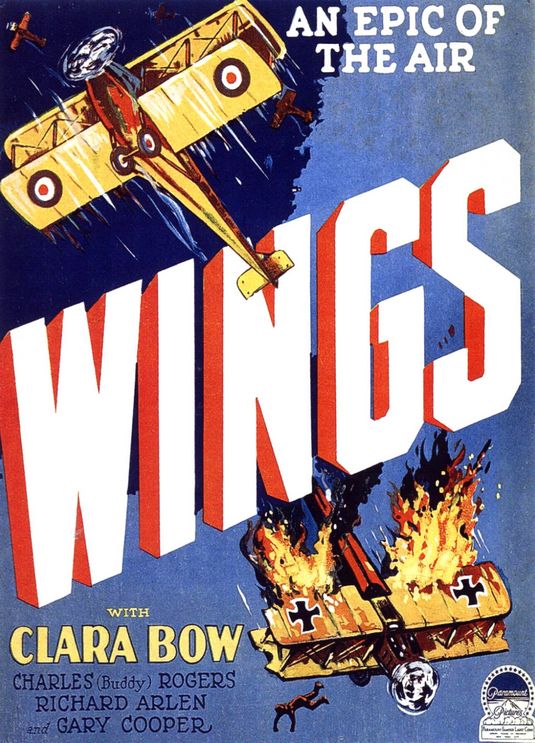
There was no suspense as to who would take home the first Oscars since the 12 winners had been announced three months earlier — including two best pictures. Fox Film’s drama SUNRISE, from German director F. W. Murnau, won for Unique & Artistic Picture while Paramount’s aerial action war drama WINGS, from director William Wellman, won for Outstanding Picture. These categories were intended as equal top awards because the fledgling Academy wanted to recognize different types of filmmaking.
A year later, however, the Academy scrapped its Unique & Artistic category in favor of giving just one top honor — the more commercial Outstanding Picture award. This fueled the Oscar best picture struggle between art films and mainstream movies that continues today. Perhaps the Academy had the right idea to begin with?




 ZAMM.COM
Leave a comment