
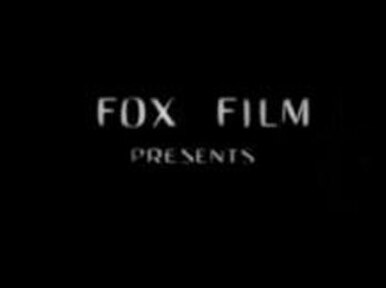
William Fox’s name lives on today as a cable news brand, but the movie studio he founded has disappeared into the shadows of Hollywood history.
Fox, who died May 8, 1952 at 73, came from Hungary to NYC as a child and worked in the garment business before buying into a Brooklyn nickelodeon in 1904. Before long, he owned 15 nickelodeons and began distributing films to keep attracting audiences.
In those early days, the emerging studios operated under licenses from movie technology inventor Thomas Edison, who formed the Motion Picture Patents Co. in 1908 and the General Film Co. in 1910. These were essentially monopolies to produce and distribute films and gobble up indie studios. Unlike most movie pioneers, Fox refused to sell to Edison. He sued under the Sherman Antitrust Act and the $370,000 settlement he won changed how the fledgling movie business developed.
He formed Fox Film Corp. Feb. 1, 1915 and went into production, enjoying great success with his first star, Theda Bara, known as “The Vamp” after her 1915 drama A FOOL THERE WAS. Fox purchased German patents in 1925 & ’26 to create the Fox Movietone sound-on-film system first used on F.W. Murnau’s 1927 drama SUNRISE. Movietone caught on and replaced Vitaphone, the sound-on-disc system Warner Bros. made famous with THE JAZZ SINGER, which premiered in NYC Oct. 6, 1927.
An opportunity for Fox to double his movie studio holdings presented itself after Marcus Loew’s untimely death at 57 in September 1927. His theatre circuit, Loew’s, Inc., had formed MGM in 1924. Fox met in 1928 with Loew’s successor, Nicholas Schenck, and proposed buying the Loew Family’s large shareholdings to merge MGM into Fox Film.
Schenck already had proposals from Paramount & WB, but Fox sweetened his $50M deal by offering Schenck a $10M fee. After six months of secret negotiations, Schenck and Fox announced a deal Feb. 24, 1929. This was a most unpleasant surprise for MGM studio chief Louis B. Mayer, who used his friendship with then President Herbert Hoover to create anti-trust problems for Fox. Hoping to solve the problem, Fox was on his way to play golf with Schenck on Long Island, where they both lived, but fate intervened.
Fox’s chauffeur got lost driving and was killed after hitting another car. Fox was seriously hurt and out of action for three months — during which the stock market crashed, wiping him out. He lost control of his company, which was taken over in May 1935 by the red hot two year old indie 20th Century Pictures, headed by Darryl F. Zanuck & Joe Schenck, brother of Loew’s boss Nick Schenck. The merger, which Fox bitterly opposed, created 20th Century-Fox.
Flash forward to 2019 when, as part of a $71.3B deal with Rupert Murdoch, who then owned 20th-Fox, Disney acquired the legendary studio and turned it into the Disney production label 20th Century Studios.

 ZAMM.COM
Leave a comment