
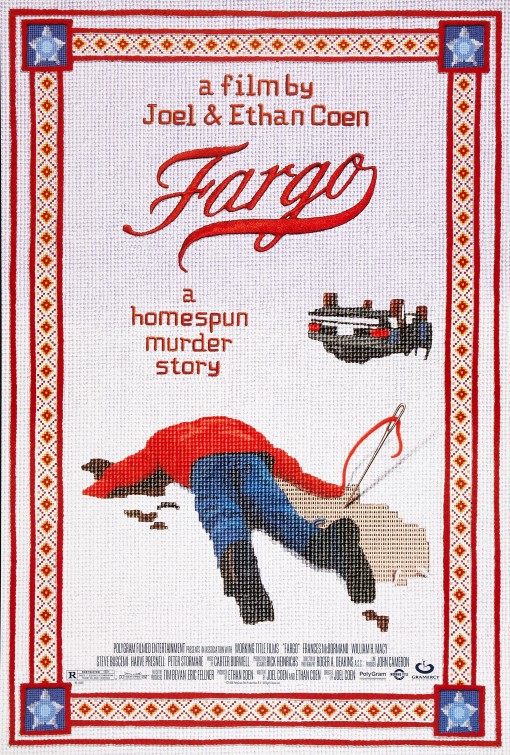
When a movie says it’s based on true events, it is — but FARGO was something of an exception.
As FARGO began, moviegoers were told: “This is a true story. The events depicted in this film took place in Minnesota in 1987. At the request of the survivors, the names have been changed. Out of respect for the dead, the rest has been told exactly as it occurred.”
FARGO’s end credits, however, included the basic fictitious persons disclaimer that designates fiction. Asked about the conflicting messages, FARGO director/co-screenwriter Joel Coen & co-screenwriter Ethan Coen said when their movie hit theatres their screenplay was based upon a real criminal event, but they’d created a fictional story about it.
In reports at the time Joel explained: “We weren’t interested in that kind of fidelity. The basic events are the same as in the real case, but the characterizations are fully imagined.”
In another interview, he said that despite what was in the movie’s opening statement, the murders didn’t happen in Minnesota. Nonetheless, Minnesotans speculated that FARGO’s story came from a 1963 murder committed in their state. The Coens, however, claimed they didn’t know about that murderer. After the individual’s death in 2015, Joel said FARGO’s true story was “completely made up — or as we like to say, the only thing true about it is that it’s a story.”
The crime thriller, which opened Mar. 8, 1996 in limited release via Grammercy Pictures, had a cast led by Frances McDormand, William H. Macy & Steve Buscemi. While promoting FARGO, the Coen Brothers told interviewers it was based on a true story. The resulting media coverage had people calling local Minnesota police departments to offer secret info about the murders.
Macy’s character, Jerry Lundegaard, was originally going to be played by Bill Pullman. Then Pullman pulled out and Macy went after the part aggressively, reading twice for the Coens. When he didn’t hear back, he flew to New York, where they were holding the auditions, to pitch them face-to-face. In this version of many about how he finally won the role, Macy warned them: “I’m very, very worried you are going to screw up this movie by giving this role to somebody else. It’s my role — and I’ll shoot your dogs if you don’t give it to me!” His threat wasn’t for real, but it worked!
Macy and the whole FARGO team earned critical acclaim. Produced by PolyGram & Working Title for just $7M, FARGO did $60.6M worldwide. It premiered in competition at the 1996 Cannes Film Festival, where it was a Palme d’Or nominee and Joel won best director.
It didn’t really matter if it was based on a true story or not. FARGO received seven Oscar noms in 1997, winning for original screenplay (Joel & Ethan) & best actress (McDormand). It also had noms for best picture, director, supporting actor (Macy), cinematography & film editing.



 ZAMM.COM
Leave a comment